
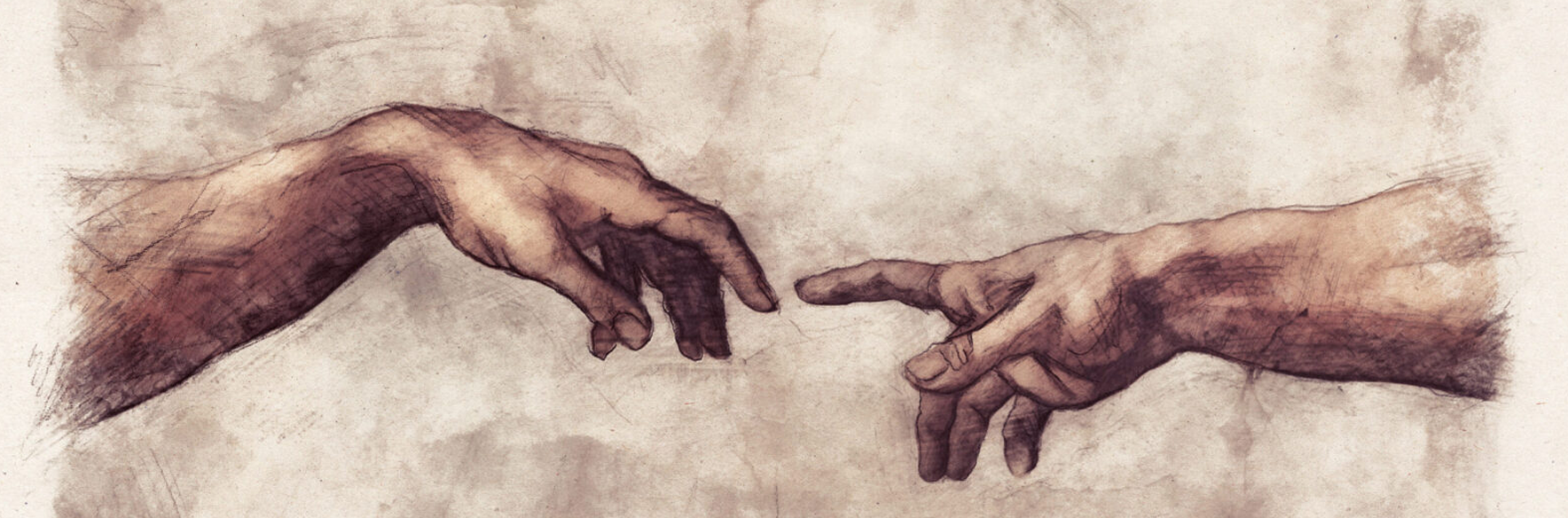
We are dedicated to exploring and researching Divine Morality through the lens of interdisciplinary contributions to human morality, also known as natural law. Modern intellectual disciplines that dominate our research area include the following: Biological Evolution, Cosmology, Paleoanthropology, Anthropology, Archeology, Linguistics, History, Cognitive Science, Cultural Noetics, Psychology, Philosophy, Scriptures from the Abrahamic Religious Traditions, the Impact of Christian Morality on Western Culture, as well as the Impact of Ancient and Modern Religious Expression on both Eastern and Western Morality. Our aim is to bring together insights from these diverse fields to foster a more comprehensive and nuanced understanding of how morality develops, evolves, and is expressed across societies and eras.
This interdisciplinary approach stands apart from traditional methodologies, which often keep each discipline isolated from others. In contrast, we believe that integrating these perspectives provides a richer and more holistic view of the human condition, one that acknowledges the complex interplay between our biological makeup and the social structures in which we live. By bridging gaps between fields, we seek to uncover the underlying principles that guide moral behavior and inform our collective sense of justice, compassion, and purpose.
When researching any cultural architecture outside of those structured through modern linguistics, we offer two distinct perspectives. First, we approach the subject from within the context of the non-modern linguistically structured culture itself, seeking to understand its internal logic and values. Then, we examine how modern linguistic intellectual disciplines interpret and assess the same dynamic, providing a comparative framework that highlights both unique and shared features across cultural expressions.
We recognize that Western culture today is fragmented and in disarray, lacking the consistent values necessary for true stabilization. Additionally, modern society is rapidly evolving into a new form of culture, one constructed and shaped by electronic media. In both cases, we believe that effective social architectural guidelines must intentionally infuse our biological underpinnings into both existing and emerging cultural norms. This holistic integration forms the foundation of what we call Divine Morality.
Our mission is to help people live with deep compassion, empathy, and justice, guided by the ancient concept of Paleo Hebrew Tsedeq, which means restorative justice and acting with compassion and empathy. We believe that Jesus, who was both fully human and fully divine, showed us the best example of living out tsedeq. restorative justice and compassion, in everyday life. By following his example, we are invited to bring these same qualities into our own lives. Jesus’s humanity demonstrates that mercy, reconciliation (restoring friendly relations), and justice can flow naturally from the divine image within each of us (imago Dei, Latin for “image of God”). This calls us, in our own human experience, to trust, and live out, these sacred instincts as we follow his path. By embracing tsedeq in our lives, we participate in a kind of “Second Coming” of Christ, bringing healing and justice into a world in need.
To further ground our mission, we can draw upon the rich field of noetics, the study of mind, consciousness, and knowledge, threading its insights through both ancient wisdom and contemporary cognitive science. At the cultural level, noetics explores how collective beliefs, symbols, and shared meanings shape societies and their moral landscapes. By recognizing tsedeq (restorative justice) as not only a spiritual imperative but also a cognitive orientation, we begin to see justice as more than an abstract ideal: it becomes a function of the mind’s deepest patterns for perceiving and enacting reality.
Cognitive science affirms that our perceptions, emotions, and ethical intuitions are entwined with both neurological wiring and lived experience. Tsedeq, in this light, can be understood as an emergent property, a way of seeing and responding to the world that arises from the union of compassion, empathy, and justice within the brain’s architecture and the heart’s longing for balance. By cultivating practices that engage both reflective consciousness and embodied presence, we nurture the neural pathways and cultural scripts that make restorative justice instinctual. Thus, to incorporate noetics into our work is to recognize that the pursuit of justice and compassion is not merely aspirational but is written into the very structure of our minds and cultures. Through intentional reflection, dialogue, and action, we participate in the ongoing shaping of reality according to the pattern of tsedeq: a reality where mercy, reconciliation, and justice are not only possible, but natural outcomes of living from the imago Dei within us all.
Rekindling Tsedeq: A Living Second Coming
Our Website’s Vision
At the heart of our website lies a luminous purpose: to advance the second coming of Jesus, not as a distant apocalyptic event, but as the restoration of tsedeq, living justice infused with mercy, compassion, and relational healing. We believe the fullness of tsedeq is found in Jesus, whose life made tangible a justice that stoops to heal, restores broken relationships, and mends the fabric of the world.
Rather than awaiting a theological rapture or final judgment, we invite you into a daily renewal, an ongoing incarnation of tsedeq through acts of empathy, forgiveness, and radical inclusivity. Our mission is to strip away abstraction and cultural barriers, making the Kingdom of God present in the here and now, accessible to all who seek wholeness and reconciliation.
Through resources, stories, and practical guidance, we encourage visitors to embody the mercy-centered justice of Jesus. Our vision is for individuals and communities to carry the light of tsedeq, serving others, nurturing the vulnerable, and responding to wrongdoing with understanding instead of retribution. In doing so, we help to make the second coming a lived reality: the radiant justice and compassion of Christ illuminating hearts, lives, and communities.
Join us in rekindling tsedeq. Let us walk together in this divine work of restoration, feeding the world’s hunger for hope, healing, and love.